###


2 hours ago


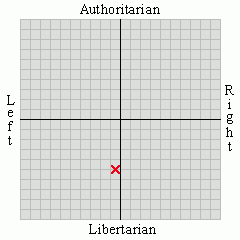
The debate over healthcare reform, like just about everything these days in this highly polarized America, has become contentious. This time however, things are a bit different. The rhetoric has risen to a frenzied pitch and there is actual public violence like we haven’t seen since perhaps the Viet Nam protests. There are a good many talking points in this debate that are misleading - many outright lies - yet the masses are swallowing the bait and taking protest to the streets. So, with apologies to Michael Shermer, I will ask…
… Why do people believe strange things?
In a survey and interview-based study published in a recent issue of the journal Sociological Inquiry, sociologists from four major research institutions concentrated on the most curious aspect of the 2004 presidential election: the strength, intensity and resilience of belief held by many of the Bush administration lie that Saddam Hussein was linked to the 9-11 terrorist attacks.
The paper, authored by researchers Steven Hoffman, Ph.D., a visiting assistant professor of sociology at the University at Buffalo; Monica Prasad, Ph.D., assistant professor of sociology at Northwestern University; Andrew Perrin, Ph.D., associate professor of sociology, University of North Carolina, Chapel Hill, addresses what it refers to as a "serious challenge to democratic theory and practice that results when citizens with incorrect information cannot form appropriate preferences or evaluate the preferences of others."
The study revealed that, although this belief influenced the election outcome, it did not result from as much pro-Bush propaganda as it did from the urgent need by many in this country to justify a war to which we were already committed. The findings illustrate possible reasons why some Americans form or accept false beliefs regarding Obama's citizenship, and in the healthcare debate.
The journal article, titled "There Must Be a Reason: Osama, Saddam and Inferred Justification," calls unsubstantiated beliefs, a "serious challenge to democratic theory and practice," and the authors discuss how and why such beliefs continue to be maintained by so many voters for so long in the absence of supporting evidence.
Co-author Dr. Hoffman says that over the course of the 2004 presidential campaign, several polls showed that majorities of respondents believed that Saddam Hussein was either partly or largely responsible for the 9/11 attacks, a percentage that declined very slowly, dipping below 50 percent only in late 2003. "This misperception that Hussein was responsible for the Twin Tower terrorist attacks was very persistent, despite all the evidence suggesting that no link existed," Hoffman says. In the study a rather substantial sampling of voters reported believing in a link between Saddam and 9/11. The researchers presented the available evidence of the link, along with the evidence that there was no link, and then urged respondents to justify the incorrect belief. For all but one, the overwhelming evidence that there was no link left no impact on their arguments in support of the link.
Hoffman says "Our data shows substantial support for a cognitive theory known as 'motivated reasoning' (similar to ‘confirmation bias’), which suggests that rather than search rationally for information that either confirms or disconfirms a particular belief, people actually seek out information that confirms what they already believe. "In fact," says Hoffman. "For the most part people completely ignore contrary information. [the study] demonstrates voters' ability to develop elaborate rationalizations based on faulty information."
So while pundits and politicians continue to blame the all-so-obvious misinformation campaigns of the Bush administration and FOX news, this study argues that premise and points to an individual or collective desire to believe in a pre-conceived worldview instead. While these deluded individuals point to the false authorities as support for the belief, it is the individual who is seeking confirmation.
As Hoffman says, "the argument here is that people get deeply attached to their beliefs," and that we humans form “emotional attachments that get wrapped up in our personal identity and sense of morality, irrespective of the facts of the matter. The problem is that this notion of 'motivated reasoning' has only been supported with experimental results in artificial settings. We decided it was time to see if it held up when you talk to actual voters in their homes, workplaces, restaurants, offices and other deliberative settings."
The same phenomena appear to be at work in this healthcare debate, with lies and hypocrisy bubbling from the bowels of advocates and opponents alike. Even as the bills have passed both houses we are seeing the talking heads still on the offensive. It don’t matter what the other side is for, I’m agin it…
The results of this study are rather dramatic, proving that irrespective of which political wing a person is affiliated, individuals exist in mass who are comfortable in their delusion and wishing to not to be confused by facts; almost all refusing to change positions even when confronted with the falsity of beliefs.
We need far more skeptics and many fewer sheep.
This missive was heavily plagiarized from a published interview with Dr. Hoffman, which can be found HERE.
~~

“…coalitional psychology is involved in the dynamics of public religious commitment. When people proclaim their adherence to a particular faith, they subscribe to claims for which there is no evidence, and that would be taken as obviously wrong or ridiculous in other religious groups. This signals a willingness to embrace the group’s particular norm for no other reason that that it is, precisely, the group’s norm.”
“Social conservatives on the State Board of Education have appointed three evolution critics to a six-member committee that will review proposed curriculum standards for science courses in Texas schools. Two of the appointees are authors of a book that questions many of the tenets of Charles Darwin's theory of how humans and other life forms evolved. One of them, Stephen Meyer, is also vice president of the Discovery Institute, a Seattle-based group that promotes an explanation of the origin of life similar to creationism.” The other author is Ralph Seelke, a biology professor at the University of Wisconsin-Superior. Also on the panel is Baylor University chemistry professor Charles Garner, who, like the other two, signed the Discovery Institute's "Dissent from Darwinism" statement that sharply questions key aspects of the theory of evolution. "
"We are skeptical of claims for the ability of random mutation and natural selection to account for the complexity of life. Careful examination of the evidence for Darwinian theory should be encouraged."

"Although small children have taboos against stepping on ants because such actions are said to bring on rain, there has never seemed to be a taboo against pulling off the legs or wings of flies. Most children eventually outgrow this behavior. Those who do not either come to a bad end or become biologists"To Know a Fly, Vincent Dethier, 1962, p. 2
In their early years children are knowledge junkies, questioning everything in their view, though exhibiting little skepticism. Most never learn to distinguish between inquisitiveness and credulity. Those who do either come to a bad end or become professional skepticsWhy People Believe Weird Things: Pseudoscience, Superstition, and Other Confusions of Our Time, Michael Shermer, 1997, W. H. Freeman.

 Posts
All Comments


